Authentic Roman Carbonara: Ditch the Cream & Master It
The mere mention of Carbonara evokes images of creamy, rich pasta, a dish beloved worldwide. Yet, for many, the authentic Roman experience remains elusive, often diluted by misconceptions and the cardinal sin of adding cream. True Carbonara is a testament to Italian culinary philosophy: a few, high-quality ingredients, expertly combined to create a symphony of flavor and texture. If you've ever dreamt of mastering a genuine
Carbonara Recipe Original, free from culinary compromises, prepare to embark on a delicious journey that will forever change your perception of this iconic dish.
Forget everything you thought you knew about Carbonara, especially if it involved a carton of heavy cream. We're peeling back the layers to reveal the pure, unadulterated essence of this Roman masterpiece, drawing inspiration from both its modern traditional form and fascinating historical accounts of its very first documented iterations.
The Soul of Carbonara: No Cream, Ever.
Let’s address the elephant in the room: cream has no place in a true Carbonara. This isn't just a purist's preference; it's a fundamental misunderstanding of the dish's very nature. Carbonara is one of the "four classic Roman pastas" – alongside Cacio e Pepe, Amatriciana, and Gricia – and each relies on a delicate emulsion, not a dairy-laden shortcut. The magic of an authentic Carbonara lies in the alchemy of cured pork fat, eggs, hard cheese, and starchy pasta water, all coming together to create a luxuriously smooth, almost custard-like coating that clings to every strand of pasta.
Adding cream dulls the vibrant flavors of the key ingredients, especially the pungent Pecorino Romano and the rich guanciale, while also creating an overly heavy texture that is far from the delicate Roman ideal. It’s a fast-food adaptation that, while popular, truly misses the point. The traditional recipe celebrates simplicity and the inherent deliciousness of its few, carefully selected components. This dedication to minimalist perfection is what elevates Carbonara from a simple pasta dish to a culinary art form.
Unveiling the Essential Ingredients for a True Carbonara Recipe Original
Crafting an authentic Carbonara means prioritizing quality over quantity. With so few components, each one must shine. Here's what you'll need to source for your truly original Roman adventure:
*
The Pasta: While spaghetti is the most common choice today, offering the perfect canvas for the silky sauce, it's fascinating to note that one of the earliest documented recipes, learned from Italian immigrants in Chicago, called for
fresh taglierini pasta, cut thinner than tagliatelle. This historical detail highlights the dish's evolving nature and offers an intriguing alternative for the adventurous cook. Regardless of your choice, ensure it's cooked perfectly
al dente – firm to the bite – as it will continue to cook slightly when tossed with the hot sauce.
*
The Meat: Guanciale is King. For the purest experience, guanciale (pronounced "gwan-CHA-leh") is non-negotiable. This cured pork jowl boasts a higher fat content and a richer, more complex flavor profile than its leaner cousin, pancetta (cured pork belly). When rendered slowly, guanciale releases an aromatic, golden fat that forms the flavorful base of the sauce, and its crispy bits provide a delightful textural contrast. While pancetta can be a substitute if guanciale is unavailable, try to seek out guanciale from a good Italian deli; the difference is truly transformative.
*
The Cheese: Parmigiano Reggiano & Pecorino Romano. Here's where personal preference and regional tradition come into play. Many modern Roman recipes call for a blend of Parmigiano Reggiano and Pecorino Romano, or sometimes just Pecorino.
*
Parmigiano Reggiano: The "King of Cheeses," offers a nutty, umami depth. It's often more widely available and provides a smoother texture to the sauce.
*
Pecorino Romano: A harder, saltier sheep's milk cheese with a sharper, tangier bite. It's intensely flavorful and distinctly Roman.
Both are fantastic, but if you're aiming for that truly Roman pungency, a significant portion of Pecorino is a must. Whichever you choose, always buy a block and grate it fresh. Pre-grated cheeses often contain anti-caking agents that can hinder the smooth emulsion of your sauce and lack the vibrant flavor of freshly grated. Store your block of quality cheese in the fridge to enjoy with many other dishes.
*
The Eggs: Whole Eggs vs. Yolks. The ratio of whole eggs to yolks varies. Some recipes, like the historically documented one, use two whole eggs for two servings. Others, aiming for a richer, more vibrant yellow hue and a silkier sauce, suggest a combination, such as one whole egg and two yolks per two servings. Whole eggs provide more volume, while yolks contribute richness and color. Experiment to find your preferred balance.
*
Black Pepper: Freshly Ground. Don't underestimate its importance. Freshly cracked black pepper, generously applied, adds a crucial aromatic warmth and a subtle spicy kick that cuts through the richness of the fat and cheese.
*
Salt: For the Pasta Water. Salt the pasta water generously – "as salty as the ocean" is the classic adage, though a little less is acceptable given the inherent saltiness of the guanciale and cheese. This ensures the pasta itself is seasoned from within.
Mastering the Method: Achieving Carbonara Perfection
The secret to a perfect Carbonara lies in precise timing and temperature control, creating a creamy emulsion without actually cooking the eggs into a scramble. It's a quick dish – often ready in less than 20 minutes – so mise en place is key!
1.
Prep Your Ingredients: Dice your guanciale (or pancetta) into small lardons. Grate your cheeses and combine them in a bowl with freshly cracked black pepper. In a separate bowl, whisk your eggs (and yolks, if using) until well combined. Set aside some extra grated cheese for serving.
2.
Render the Guanciale: Heat a dry skillet (cast iron works wonderfully) over medium heat. Add the diced guanciale and cook slowly, stirring occasionally, until it's beautifully crispy and has rendered most of its fat. This slow rendering is crucial for extracting maximum flavor. Once crispy, remove the guanciale pieces with a slotted spoon and set them aside, leaving the rendered fat in the pan. This rich fat will form the base of your sauce.
3.
Cook the Pasta: Bring a large pot of water to a rolling boil. Salt it generously. Add your pasta and cook according to package directions, aiming for a firm al dente. Just before the pasta is ready, reserve about 1-2 cups of the starchy pasta water – this golden liquid is essential for creating the sauce.
4.
Build the Emulsion: This is the crucial step.
* Using tongs, transfer the al dente pasta directly into the skillet with the rendered guanciale fat. Toss vigorously to coat the pasta.
* Remove the pan from the heat. This is important to prevent the eggs from scrambling.
* Immediately pour the whisked egg and cheese mixture over the hot pasta. Begin tossing and stirring rapidly.
* Gradually add small splashes of the reserved hot pasta water, continuing to toss and stir. The heat from the pasta and the pan, combined with the starchy water, will gently cook the eggs and melt the cheese, creating a glossy, creamy sauce that beautifully coats the pasta. The key is constant movement and adding just enough pasta water to achieve your desired consistency – not too thick, not too runny.
* Finally, stir in most of the crispy guanciale pieces, saving a few for garnish.
Mastering Carbonara: Guanciale, Parmigiano, and No Mistakes means paying close attention to these details, especially the temperature control and the precise addition of pasta water.
A Nod to History: The "First Documented" Carbonara
It's fascinating to consider the evolution of Carbonara. The very first documented recipe, recorded by an American food critic who learned it from Italian immigrants in Chicago, offers a glimpse into an earlier, perhaps less refined, version. This particular "
Carbonara Recipe Original" differed in several intriguing ways from today's accepted Roman standard:
* It specifically called for
fresh taglierini pasta.
* It used only Parmigiano Reggiano cheese.
* Crucially, after combining the pasta, rendered pancetta, and the egg-and-cheese mixture, the entire dish was stirred over
medium heat until the eggs thickened and cooked.
This method of actively cooking the eggs on the stove, while diverging from the modern Roman technique of off-heat emulsification, highlights a different approach to achieving a cohesive sauce. It reminds us that even classic dishes have a history of adaptation and evolution. For those interested in exploring this historical variant, understanding its nuances is key.
Original Carbonara Uncovered: Fresh Pasta & Cooked Eggs delves deeper into this intriguing early documentation.
Serving Your Authentic Roman Carbonara
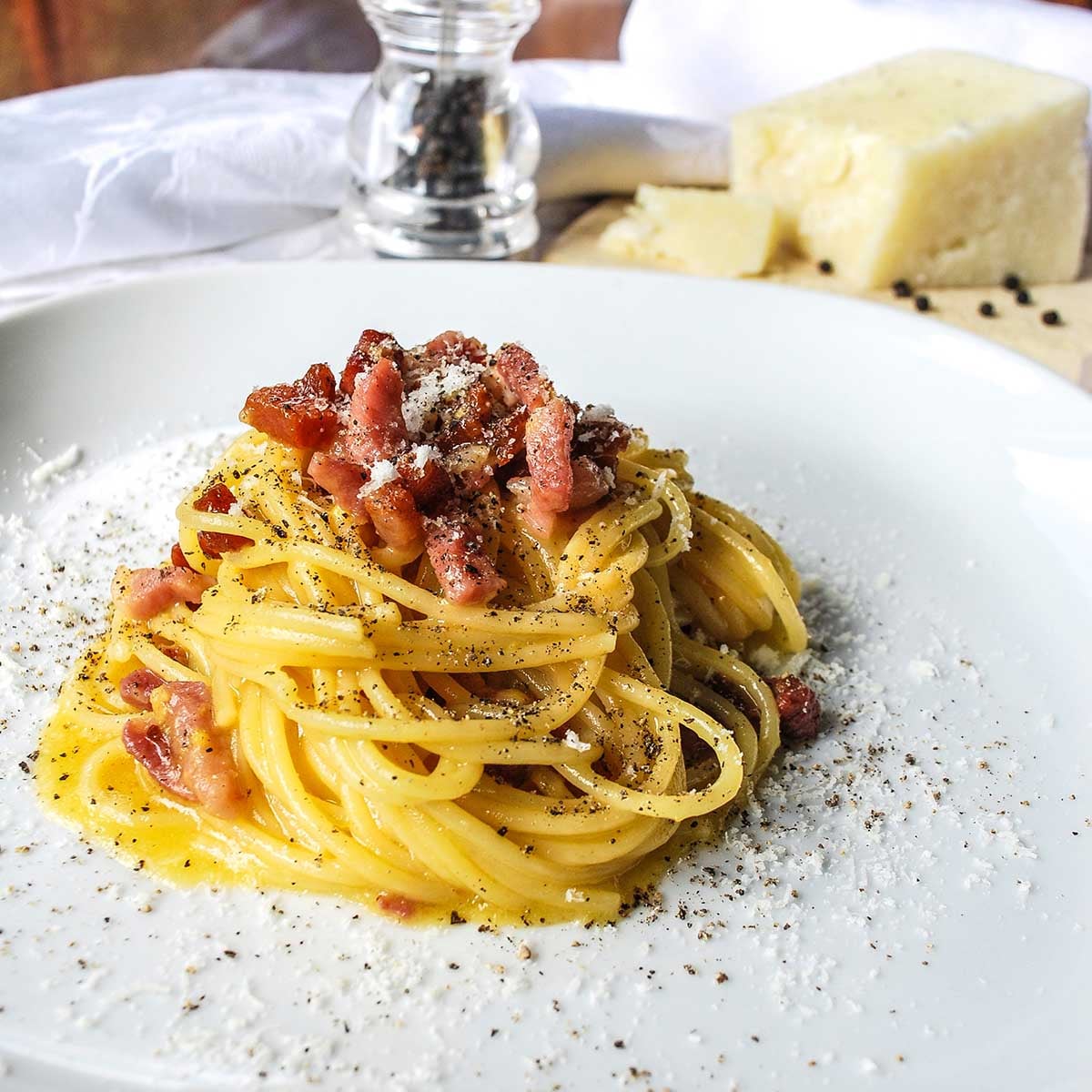
Serve your Carbonara immediately, piping hot. Garnish with a final sprinkle of crispy guanciale, extra freshly grated cheese, and a generous crack of black pepper. The sauce should be glossy and rich, clinging lovingly to the pasta, not sitting in a pool at the bottom of the plate.
Ditching the cream and embracing the authentic Roman methods might seem daunting at first, but the reward is immense. You'll discover a dish of unparalleled depth and elegance, a true testament to Italian culinary wisdom. The simplicity of ingredients, coupled with masterful technique, transforms humble components into an extraordinary meal. Buon appetito!