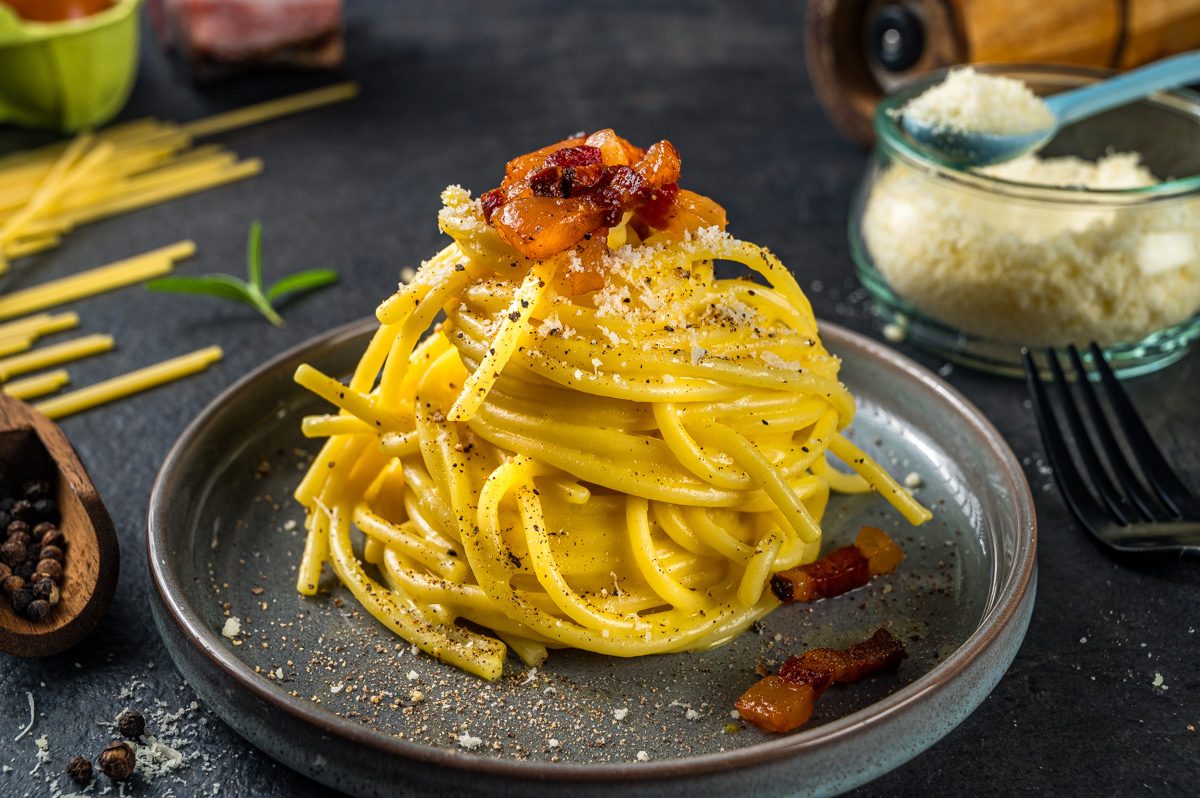
Mastering Carbonara: Guanciale, Parmigiano, and No Mistakes
Carbonara. Just the name conjures images of creamy, rich pasta, a true testament to Italian culinary genius. Yet, few dishes are as widely beloved and, simultaneously, as frequently misunderstood and incorrectly prepared. Often, what passes for Carbonara outside of Italy would bring tears to the eyes of any Roman nonna. If you've ever dreamt of perfecting this Roman classic, understanding the
authentic Carbonara recipe means embracing simplicity, respecting quality ingredients, and ditching the common misconceptions. Prepare to discover the true "Carbonara Recipe Original," a dish that relies on just a handful of elements to create pure magic.
The True Essence of Carbonara: Beyond the Myths
The heart of an authentic Carbonara beats with a robust, unadulterated flavor profile, far removed from the creamy, often bacon-laden versions that have proliferated globally. Hailing from Rome, Carbonara stands as one of the city's four iconic pasta dishes, a pillar of Italian comfort food. Its true allure lies in the harmonious interplay of cured pork, eggs, hard cheese, and black pepper, all emulsified with starchy pasta water to create a velvety sauce that clings perfectly to every strand.
The most egregious mistake, one that sends shivers down the spine of Italian purists, is the addition of cream. Let us be clear: there is no cream in an original Carbonara. The luxurious texture comes from the careful whisking of egg and cheese with the rendered fat of the pork and a touch of the pasta's cooking water. This creates a rich, smooth sauce that's dairy-free (save for the cheese) and incredibly flavorful.
Interestingly, the very first documented "Carbonara Recipe Original" has a fascinating backstory. It was penned by an American food critic who learned it from Italian immigrants in Chicago. This early version, while foundational, reveals some intriguing differences from what is widely accepted as authentic today, particularly concerning the type of pasta, the choice of cheese and meat, and even the method of cooking the eggs. This historical insight offers a unique perspective on the evolution of this beloved dish. For a deeper dive into this fascinating origin, explore
Original Carbonara Uncovered: Fresh Pasta & Cooked Eggs.
Decoding the Ingredients: A Deep Dive into Authenticity
With so few ingredients, the quality of each component becomes paramount. This isn't a recipe where you can cut corners; each element plays a crucial, irreplaceable role in building the dish's signature depth and texture.
The Unsung Hero: Guanciale (or its Predecessor)
When it comes to the pork, the undisputed champion for authentic Carbonara is
guanciale. This cured pork jowl, with its distinct peppery rind and high fat content, renders into crispy bits and yields a flavorful, translucent fat that forms the foundation of the sauce. Its flavor is more complex and nuanced than pancetta, bringing an incomparable depth to the dish.
While guanciale is the modern purist's choice, it's worth noting the earliest documented Carbonara recipe actually specified
pancetta. Pancetta, cured pork belly, is more widely available and can be a suitable substitute if guanciale proves elusive. However, for the truly authentic experience, make the effort to find guanciale. It’s worth it. When cooking, render the guanciale slowly over medium heat until deeply golden and crisp. This releases its precious fat and transforms the meat into delectable morsels.
The Cheesy Duet: Parmigiano Reggiano and Pecorino Romano
The cheese component is equally vital. The original Roman Carbonara typically calls for a combination of
Parmigiano Reggiano and
Pecorino Romano, or sometimes just one of them. Parmigiano Reggiano, with its nutty, complex flavor, provides a foundational umami. Pecorino Romano, on the other hand, offers a sharper, saltier, and more piquant kick, characteristic of Roman cuisine. Together, they create a balanced, intensely savory profile.
The earliest documented recipe specifically mentioned "grated Parmigiano Reggiano cheese," providing a clear historical reference. Regardless of your chosen blend, always buy a block of high-quality cheese and grate it fresh. Pre-grated cheeses often contain anti-caking agents that can hinder the sauce's emulsion and dull the flavor. A block of Parmigiano Reggiano might not be the cheapest, but its unparalleled taste will shine in a recipe with so few ingredients. Store it well in the fridge; it's a versatile cheese perfect for countless Italian dishes.
Eggs: The Binding Magic (and a Historical Twist)
The eggs are the emulsifier, the binder that transforms fat and cheese into a creamy sauce. Many traditional recipes use a combination of whole eggs and egg yolks – for instance, one whole egg and two yolks for two servings. The yolks contribute richness and help achieve a silkier texture, while the whole egg adds a bit more volume.
Here's where the historical record presents a fascinating divergence: the very first documented Carbonara recipe instructed combining the eggs and cheese and then pouring this mixture over the pasta and
stirring all together over medium heat until the eggs have thickened and cooked. This is a crucial distinction, as modern authentic methods typically emphasize creating the emulsion off-heat, using the residual warmth of the pasta and pan to gently cook the eggs without scrambling them. For our main recipe, we'll focus on the latter, more commonly accepted traditional technique to achieve that signature creamy, non-scrambled texture, but acknowledging the historical precedent adds a rich layer to Carbonara's story.
Pasta: Fresh vs. Dried – A Surprising Origin Story
While today spaghetti is synonymous with Carbonara, the earliest documented recipe actually called for
fresh taglierini pasta, cut slightly thinner than tagliatelle. This is a significant revelation, as fresh pasta behaves differently than dried pasta, particularly in its cooking time and starch release.
For the modern rendition of the Carbonara Recipe Original, dried spaghetti remains the standard. Its firm texture and ability to release the right amount of starch into the cooking water are key to forming the perfect sauce. When cooking, ensure your pasta water is generously salted – "as salty as the ocean" is a common adage, though you can use a little less given the saltiness of the guanciale and cheese. Remember to reserve plenty of this starchy water before draining your pasta, as it's essential for emulsifying the sauce.
Crafting Your Masterpiece: Step-by-Step Perfection
Now that we understand the ingredients, let's bring them together to create the ultimate Carbonara. This recipe focuses on the widely accepted authentic method, ensuring a luscious, non-scrambled sauce.
Yields: 2 servings
Prep time: 10 minutes
Cook time: 15 minutes
Ingredients:
* 7 ounces (200g) dried spaghetti
* 3.5 ounces (100g) guanciale, diced into small lardons
* 2 large egg yolks + 1 whole large egg
* 2 ounces (55g) freshly grated Pecorino Romano cheese (or a mix of Pecorino and Parmigiano Reggiano)
* Freshly ground black pepper, to taste
* Salt for pasta water (and a pinch for the egg mixture, if needed)
Instructions:
1.
Prepare the Guanciale: Place a large skillet (large enough to hold your pasta later) over medium heat. Add the diced guanciale. Cook slowly, stirring occasionally, until the guanciale is deeply golden brown and crispy, and a generous amount of fat has rendered. This should take 8-10 minutes. Use a slotted spoon to remove the crispy guanciale bits and set them aside on a plate lined with paper towel. Keep the rendered fat in the skillet.
2.
Start the Pasta Water: Bring a large pot of water to a rolling boil. Once boiling, salt it generously. Add the spaghetti and cook according to package directions until al dente.
3.
Prepare the Egg Mixture: While the pasta cooks, combine the egg yolks and whole egg in a medium bowl. Add the grated Pecorino Romano (and/or Parmigiano Reggiano) and a generous amount of freshly ground black pepper. Whisk vigorously until well combined and slightly pale. Do not add salt to the egg mixture yet, as the cheese and guanciale are salty.
4.
Reserve Pasta Water: Before draining the pasta, ladle out about 1.5 cups of the starchy pasta water into a mug or bowl. This water is critical for the sauce.
5.
Combine & Emulsify: Using tongs, transfer the al dente spaghetti directly from the pot into the skillet containing the rendered guanciale fat (off the heat). Add a splash of the reserved pasta water (about ¼ cup) and toss vigorously to coat the pasta.
6.
Create the Sauce: Pour the egg and cheese mixture over the pasta in the skillet. Working quickly and constantly, toss and stir the pasta with tongs. Add small splashes of the reserved pasta water, as needed, while continuing to toss. The heat from the pasta and the pan, combined with the starchy water, will gently cook the eggs and create a glossy, creamy emulsion that coats the spaghetti. Do not put the pan back on high heat, as this will scramble the eggs.
7.
Final Touches: Continue tossing until the sauce is creamy and coats the pasta beautifully. Stir in most of the reserved crispy guanciale bits. Taste and adjust seasoning with more black pepper if desired. Only add a tiny pinch of salt if absolutely necessary, given the saltiness of the other ingredients.
8.
Serve Immediately: Transfer the Carbonara to warm plates. Garnish with the remaining crispy guanciale bits and an extra dusting of black pepper. Buon appetito!
Common Pitfalls and How to Avoid Them
*
Adding Cream: As discussed, this is the cardinal sin. The creaminess comes from the emulsion, not dairy.
*
Scrambled Eggs: The most common mistake. Ensure your pan is off the heat when you add the egg mixture. The residual heat is sufficient. Work quickly and continuously toss. Adding a bit of cool pasta water (if the pan feels too hot) or taking the pan further away from the stove can help.
*
Cold Pasta: The pasta must be hot to properly emulsify the sauce. Transfer it immediately from the boiling water to the pan.
*
Not Enough Pasta Water: The starchy pasta water is your best friend. It helps create the emulsion and adjust the sauce's consistency. Don't be shy about using it, adding it gradually.
*
Low-Quality Ingredients: With so few components, each one shines. Invest in good guanciale, authentic Parmigiano Reggiano or Pecorino Romano, and fresh eggs.
Conclusion
Mastering the Carbonara Recipe Original is a journey of appreciation for Italian culinary tradition. It's about respecting the integrity of simple, high-quality ingredients and understanding the delicate balance required to transform them into a dish that is far greater than the sum of its parts. By eschewing cream and embracing the authentic techniques, from rendering guanciale to creating that perfect off-heat emulsion, you can achieve a Carbonara that is truly Roman in spirit and utterly unforgettable in taste. So, next time you crave this Italian classic, remember the rules, arm yourself with the right ingredients, and prepare to create a masterpiece that would make any Italian proud.